
Hire Developers in the Philippines
Software Development in the Philippines
At a glance
Software engineers in the Philippines
The Philippines has a large, fast-growing developer pool - but hiring there comes with its own rules. This guide covers what the market actually looks like, how to hire and pay compliantly, how to vet candidates, and where to find them.
The Philippines is another popular Asian destination for outsourcing software engineers. Offshoring has been popular in the Philippines for the past three decades, and an estimated 1.9 million individuals currently work for foreign companies. Software engineering is a prestigious and respectable occupation, and every year around 47,000 students graduate with degrees in engineering and technology and 32,000 with degrees in information technology. Filipino software engineers are some of the most affordable in the Asia-Pacific region, with only a few countries in the region, such as Vietnam, offering lower rates. Almost half of them will ask for under $20 USD/hour, and the rest will most likely charge $20-$55/hour.
The Philippines was colonized by the United States for 48 years, before gaining independence in 1946. American culture, such as fashion, films, or food, still influences the Filipino lifestyle. The second national language is English, and in 2025, the country ranked #28 in the English Proficiency Index, far above India. Out of the countries we have tested, only Serbia has ranked higher.
How to hire software engineers in the Philippines
Contractor of Record
The simplest and easiest way to hire a Filipino software engineer is through a Contractor of Record (CoR). With a CoR, a third party like EliteBrains becomes the legal contracting party with the engineer. You do not sign directly with the engineer, but with EliteBrains, and they handle the contract, local compliance, as well as Philippine tax requirements. This setup brings several major advantages.
First, compliance: Philippine courts and the National Labor Relations Commission (NLRC) apply a strict "four-fold test" - selection and engagement, payment of wages, power of dismissal, and power of control - to decide whether someone working for you is really an independent contractor or, in the eyes of the law, an employee. Control over how, when, and where the work gets done is the most heavily weighted factor, and Philippine jurisprudence consistently favors the worker in disputes. Getting the classification wrong exposes you to back pay, mandatory benefits, and damages. A CoR absorbs this risk instead of you.
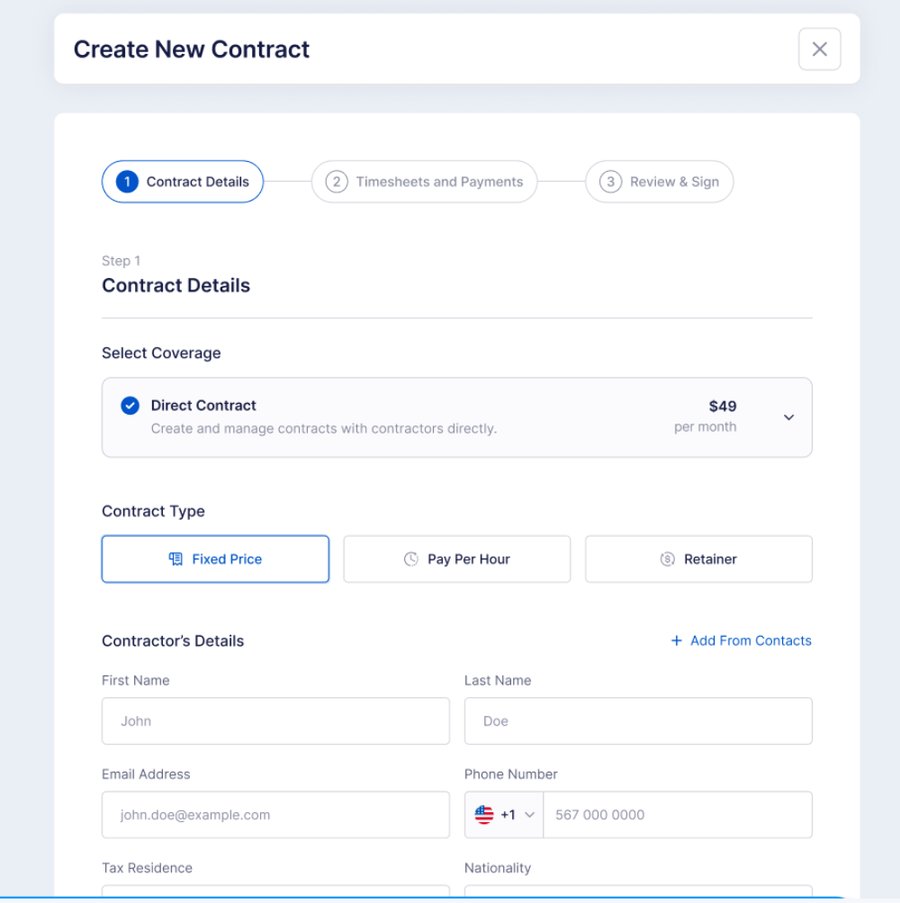
Second, liability: since EliteBrains is the contracting party, you are shielded from Philippine labor law, and should the NLRC or the Department of Labor and Employment (DOLE) come asking questions about a contractor's status, they go to EliteBrains, not you.
Third, the relationship stays clean on your end: your company has a straightforward B2B arrangement with EliteBrains - no payroll, no local registration, no HR overhead - while you still manage the engineer's actual day-to-day work and direction yourself. You get all the control of working directly with someone, none of the legal burden of employing them.
Create an entity in the Philippines
If you want to hire on your own, you'll need to set up a legal entity in the Philippines. For a foreign company, that usually means either registering a domestic corporation or a branch office with the Securities and Exchange Commission (SEC). You will need to reserve a name, file your incorporation papers, and appoint a local resident agent to receive legal notices. You'll also need to put up real capital: foreign-owned entities generally need USD $200,000 in paid-up capital, wired into a local bank account. With clean paperwork, the whole process takes about a month or two.
Once your entity has been created, you'll register with the Bureau of Internal Revenue (BIR) for a Tax Identification Number and the right to issue official receipts, then enroll with the three mandatory social agencies: SSS, PhilHealth, and Pag-IBIG. From there, any engineer you hire comes on as a full employee, covered by the Philippine Labor Code. That means mandatory 13th-month pay, paid leave, holiday and overtime premiums, and employer contributions on top of their base salary, plus ongoing annual filings once the entity is running.
The upside here is simplicity: you're the legal employer, fully in control, with no classification risk. The downside is cost and effort. Between the capital requirement, the registration process, and the ongoing payroll and compliance work, the costs can easily outweigh the benefits.
Cross-border payments
Another option is to skip the entity and hire Filipino software engineers directly as contractors rather than as employees. Assuming you already found an engineer to hire, this process is quite fast, but also has its downsides. Despite hiring the engineer as a contractor, the relationship between the hiring company and the engineer is judged on what actually happens day to day, not on what the contract says. If you set the engineer's hours, dictate how the work gets done, supervise them closely, and the work they do is integral to your business, a labor complaint can succeed in reclassifying them as an employee - regardless of how the paperwork is worded. If forced into reclassification, you will face legal consequences, penalties, and even back pay. And since there is no third party shielding you from the exposure, it is yours alone to deal with.
How to pay software engineers in the Philippines
Domestically, the country runs on two systems: InstaPay for real-time transfers up to 50,000 Philippine pesos, and PESONet for same-day transfers on larger amounts. Both connect to e-wallets like GCash and Maya, used by most Filipino freelancers. The catch: neither system can receive money sent from outside the Philippines, meaning you cannot pay your contractor directly.
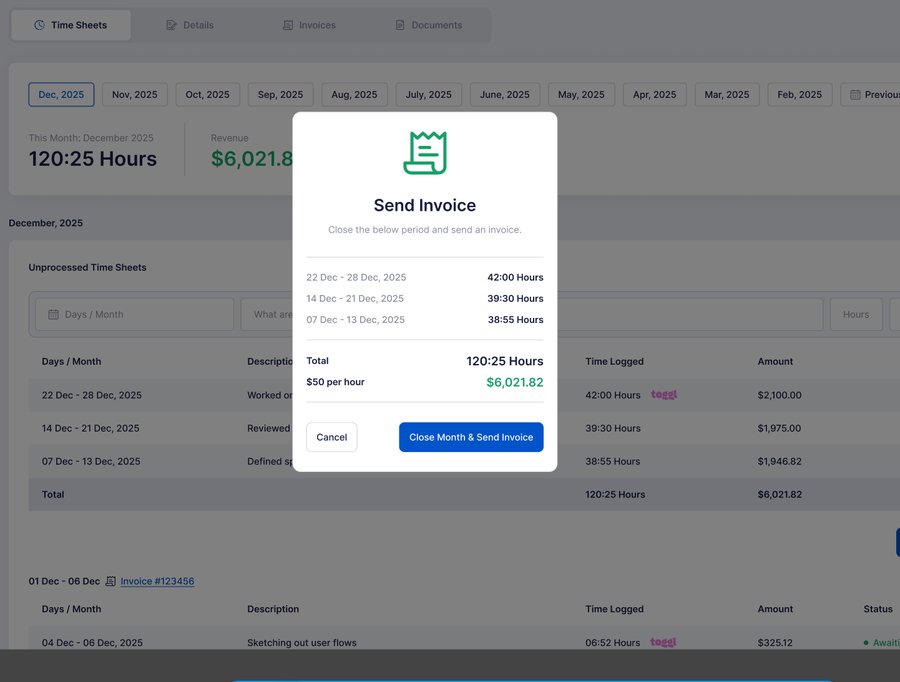
In late 2025, GCash addressed part of this gap with a Virtual US Account feature, letting verified users receive USD payments directly from a US bank account via ACH or wire and convert to pesos whenever the rate suits them. Even so, most companies still route international payments through an intermediary that converts the currency and settles locally on the Philippine side - exactly the kind of situation a platform like EliteBrains is built to handle. Paying a Filipino software engineer shouldn't mean wrestling with SWIFT transfers, chasing a good exchange rate, or reconciling invoices by email - and with EliteBrains, it doesn't.
EliteBrains encompasses everything needed to hire a software engineer in the Philippines. Once you've hired, you set up the contract directly on the platform: define the rate and lay out reporting rules and payment conditions up front. The engineer uses the platform to log their hours or submit deliverables as work progresses. You stay in control of approvals, and when it's time to pay, EliteBrains handles the payout. Contracts, approvals, and payments all live in one place, so nothing falls through the cracks between hiring someone and actually getting them paid.
Testing software engineers
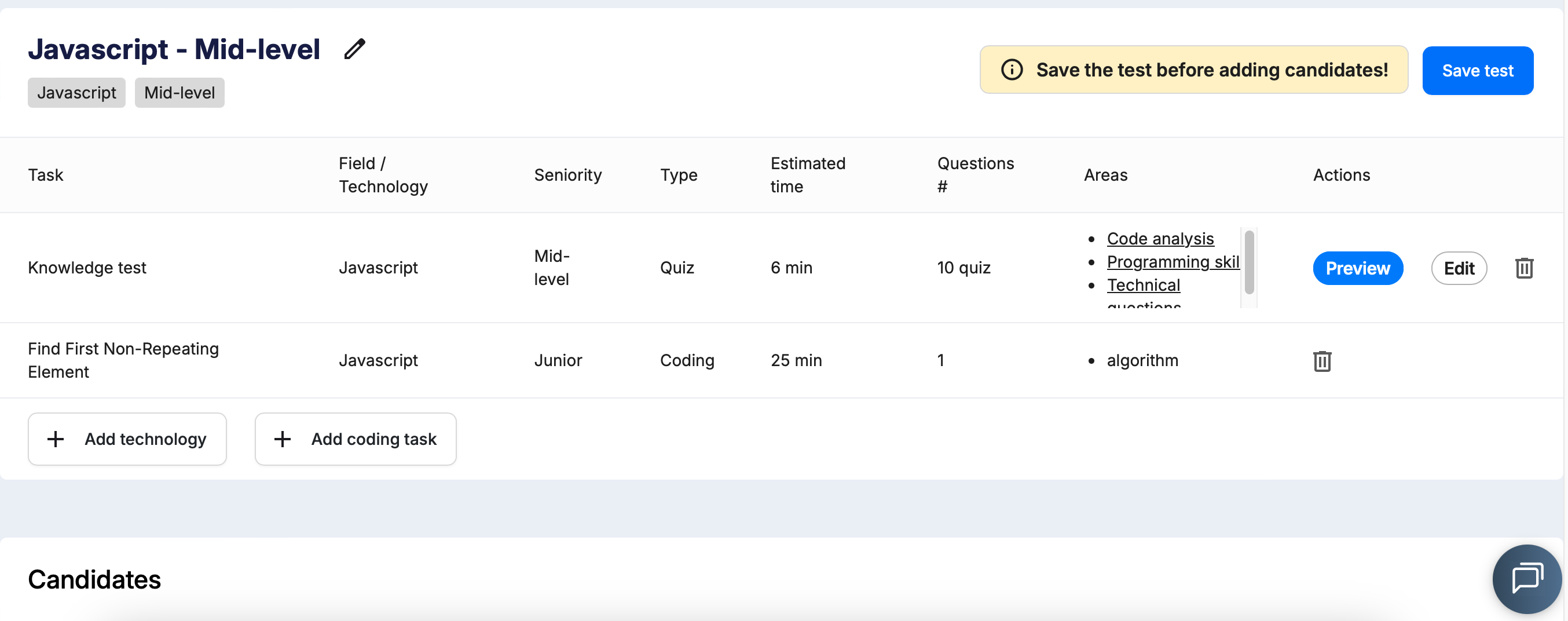
So how do you make sure the engineer you're hiring is actually the best for the job? A resume often won't tell you that - it just tells you what someone says they've done, not what they can actually do. This is where EliteBrains' AI skill assessment comes in, making the whole process quick and easy. Just feed it the job description, the skills you need, and the seniority level, and it builds a real test in seconds.
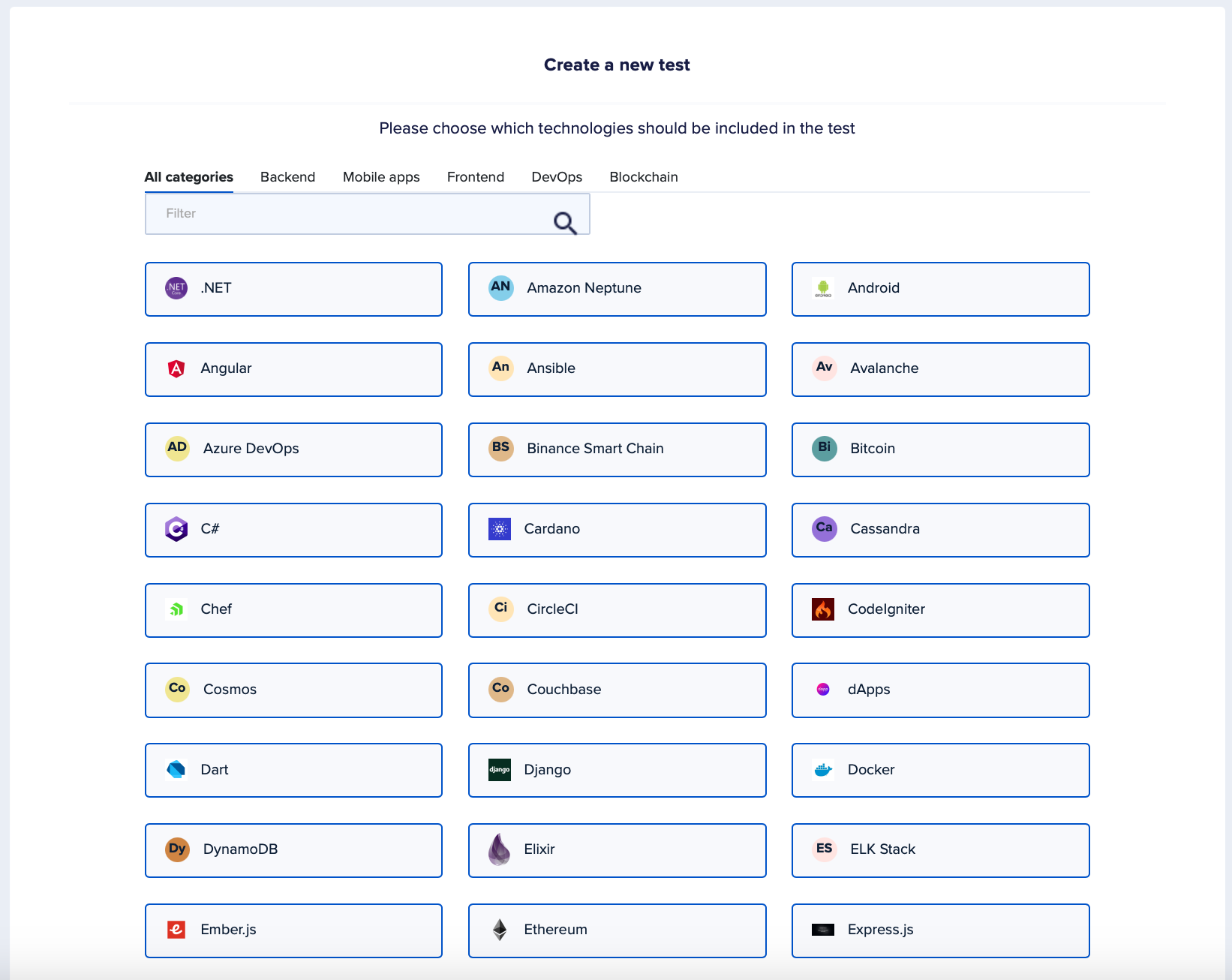
Not trivia questions - real tasks, the kind the person would actually do on the job. Every candidate gets the same test and the same scoring, making comparison simple. By the time your team sits down for an interview, you're only talking to people who've already proven they can do the work.
How to find software engineers in the Philippines
You know how you'll hire, pay, and test a Filipino software engineer - now you just need to find one. These are the most common approaches, and where they fall short:
Searching manually
You can search for your engineer manually on platforms like LinkedIn or GitHub, which is free, but it's slow and entirely on you. Messaging engineers cold means low response rates, and no real way to verify skill until you're already deep in the process.
Marketplaces
Another option is open marketplaces - a fast method, but risky in quality, since anyone can sign up and call themselves an engineer. Not to mention the classification and cross-border payment barriers described above. You could also turn to more premium, vetted marketplaces, where quality is much better, but which come with a steep price floor and high hourly rates.
Tech recruiters or personal agencies
You could also choose to use a local recruiter with market knowledge who can hand you a shortlist without you lifting a finger - but you pay greatly for that. Agency fees typically run as a percentage of the hire's salary, on top of whatever you're already paying the engineer, which adds up fast.
Elite Brains
EliteBrains sourcing is built to skip that whole trade-off - speed, quality, price, legal risk, all of it. Posting a job is free. From there, EliteBrains' AI looks through hundreds of thousands of profiles and brings you the ones that actually match what you're looking for. Every engineer has already been through a rigorous vetting process before you even see their profile, so you're choosing from people who've already proven themselves. You move at your own pace, and if it's not the right fit, there's a risk-free trial before you commit to anything. And once you've found your engineer, everything stays in one place: the skill tests, the contract, the payments. No bouncing between five different tools just to hire one person.
Hire & pay Filipino contractors, compliantly
Skip the entity setup. We handle contracts, compliance and payments as your Contractor of Record.
Book a demo* EliteBrains assumes no responsibility or liability for any errors or omissions in the content of this article. The information contained in this article is provided with no guarantees of completeness, accuracy, usefulness or timeliness.
Create a free account
By signing up, you agree to our Terms of Service and Privacy PolicyWhy use EliteBrains
- Verify skills before you commit Assess candidates upfront and make decisions based on real ability, not just CVs.
- Simple, structured contracts Create and manage contractor agreements without legal confusion or endless back-and-forth.
- Clear payments and tracking Keep full visibility over work, approvals, and payments in one streamlined flow.
- Everything in one place From skill checks to contracts and payouts, manage your contractors without scattered tools.


“With EliteBrains, we streamlined contracts, approvals, and payments into one simple workflow.”